culture
Cairns transforms arts scene: from post-war gatherings to waterfront crowds
Cairns arts venues have shifted from small post-war gatherings to year-round programs that draw crowds along the waterfront.
How we reported this
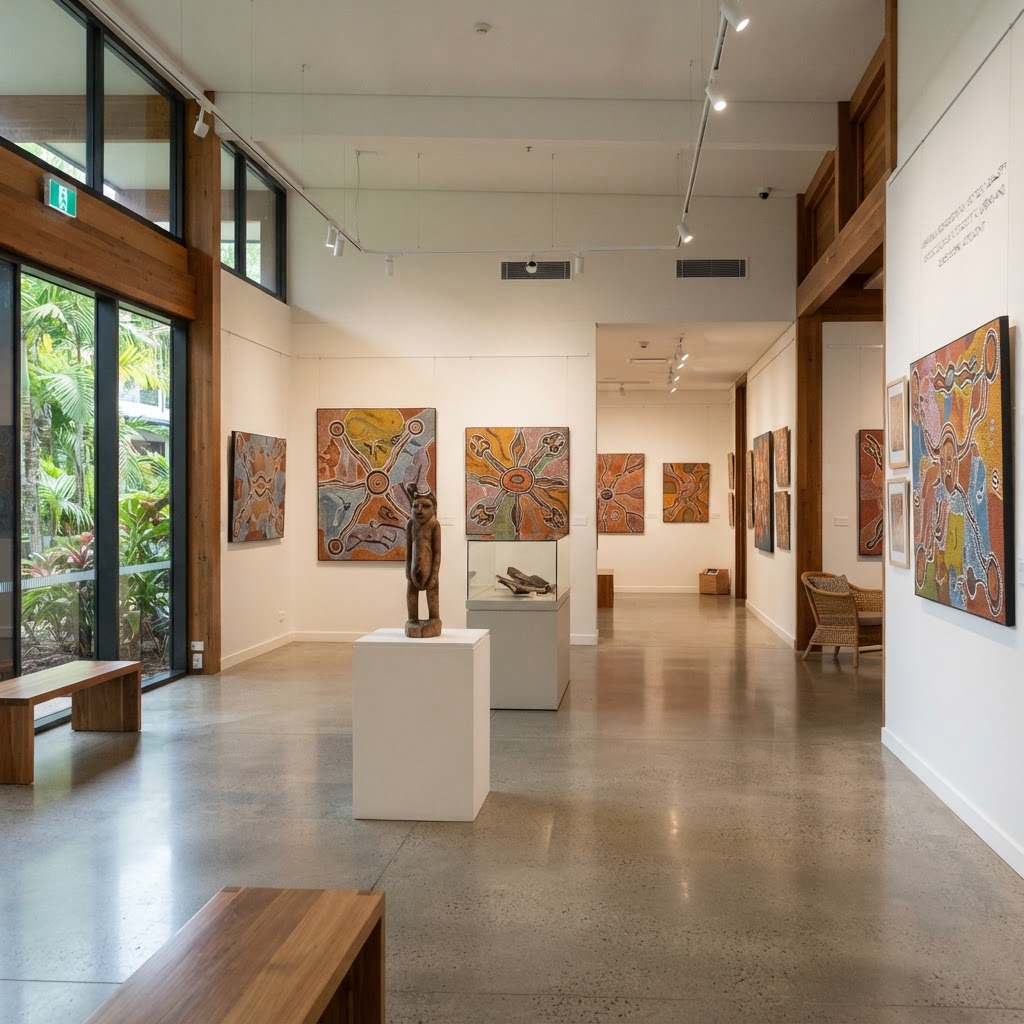
The Cairns Regional Gallery on Abbott Street opened its latest exhibition wing last month, extending a run of shows that began with a 1978 pop-up display of local watercolours in a rented shopfront on Lake Street.
That early effort drew 400 visitors over two weekends. Today the same organisation runs three permanent spaces and partners with the council on events that stretch across the Esplanade foreshore. The growth tracks Cairns' change from a wartime supply base to a tourism gateway that now hosts more than 2.8 million overnight visitors each year.
Two sites anchor the current scene. The Tanks Arts Centre on Collins Avenue occupies 1940s naval storage tanks converted in 1995, while the Munro Martin Parklands stage hosts free Sunday concerts that started in 2012. Both locations sit inside the Cairns North postcode and receive annual grants from the Regional Arts Development Fund.
From wartime halls to dedicated venues
Before the Tanks conversion, most performances happened in the old Cairns Civic Theatre on Spence Street, which seated 650 people and hosted touring companies only twice a year. By 1985 the council had opened a second room at the courthouse annexe for local theatre groups, cutting average ticket prices from $18 to $12 and doubling the number of weekly shows.
Attendance records kept by the Cairns Regional Council show 12,400 tickets sold across all venues in 1990. Last financial year the figure reached 87,000, with the largest single event drawing 4,200 people to a one-night outdoor screening at the parklands.
Practical steps for visitors and residents
Check the Tanks website for the July program that includes a $25 workshop on traditional weaving held every Wednesday evening. The Cairns Regional Gallery offers a $10 entry pass that covers both buildings and remains valid for seven days. Free maps of the walking route between the two sites are available at the visitor centre on the Esplanade.