property
How Much Rent Is Too Much? The 30% Rule in Practice
With Cairns rents climbing and wages struggling to keep pace, the old one-third-of-income benchmark is starting to look like a luxury rather than a safety net.
How we reported this
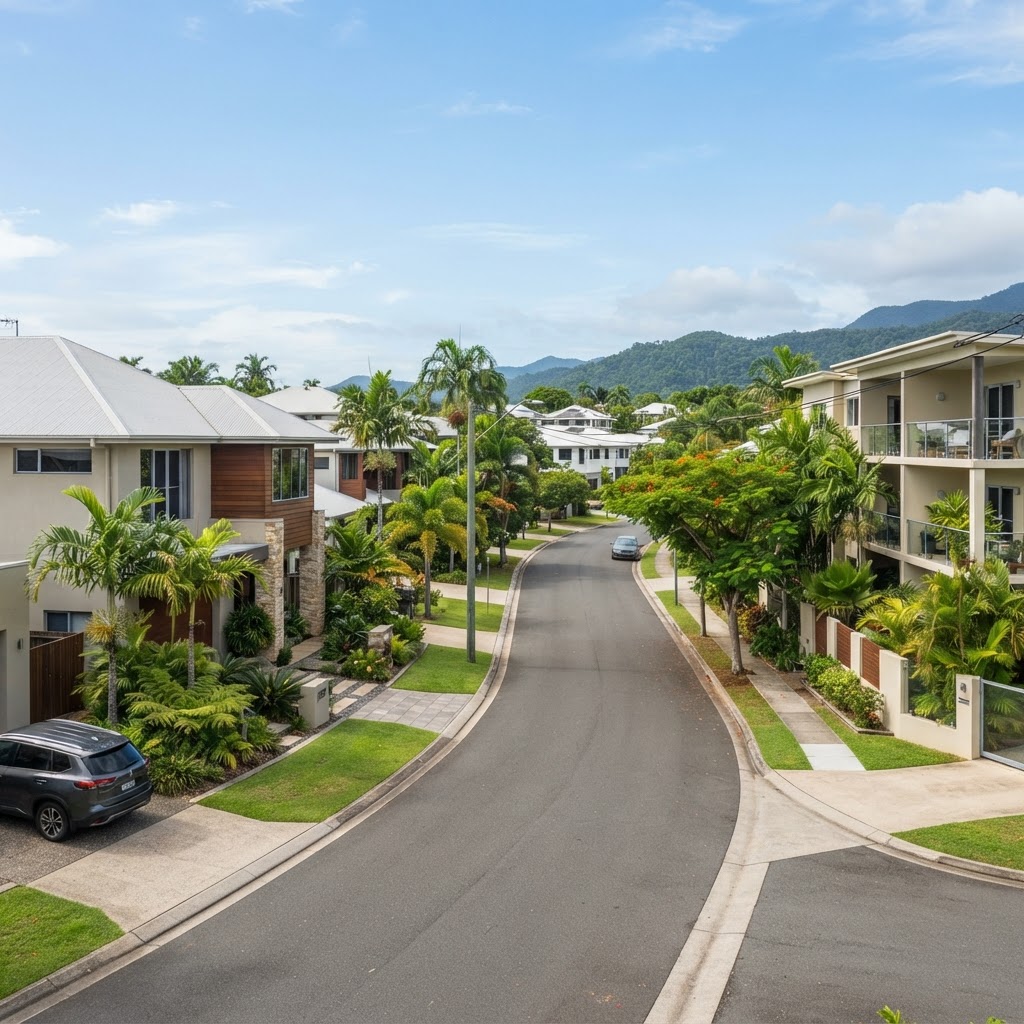
A household earning the Queensland median wage and renting a standard three-bedroom home in Cairns North is already spending close to, or beyond, 30 percent of gross income on rent. That threshold, long used by housing advocates and financial counsellors as the outer boundary of affordability, is now a line many Far North Queensland renters cross every single fortnight.
The timing matters. With Melbourne's auction market recording its weakest winter opening in recent memory and Gen Z buyers nationally signalling they still want a foot on the property ladder, the rent-versus-buy tension is sharpening everywhere. In Cairns, it has a particular edge: the tourism and hospitality workforce that keeps the city running is concentrated in exactly the income bands where the 30 percent rule bites hardest.
What the Numbers Look Like on the Ground
Queensland's median house price sits around $420,000, according to broad market figures circulating through the industry in mid-2026. In Cairns, that median buys you something modest, a post-war weatherboard in Manunda, perhaps, or a lowset brick in Manoora. Meanwhile, a three-bedroom rental in the Northern Beaches corridor, stretching from Smithfield through to Trinity Beach, is regularly listed between $550 and $650 per week on the open market. Run that against a full-time hospitality worker on the Award rate, roughly $900 to $950 per week before tax, and the arithmetic is brutal. Even at the lower end of $550 per week, rent consumes more than 57 percent of gross wages for a single-income household. A couple both working similar Award jobs fares better, but childcare costs and the price of a single car to get from Trinity Beach into the CBD quickly erode that buffer.
The 30 percent rule itself dates back to public housing policy in the United States in the 1960s and was adopted in Australian housing assistance frameworks over subsequent decades. The National Housing Finance and Investment Corporation and various state bodies have used it as a benchmark for defining rental stress. In Queensland, the Department of Housing has applied versions of this threshold in eligibility assessments for programs including RentConnect, which assists low-income renters in the private market. For a household to stay under 30 percent on a $550-per-week rental, gross household income needs to be at least $95,333 per year, a salary that a significant portion of Cairns workers in retail, hospitality, and aged care simply do not earn.
Buying Doesn't Automatically Fix the Problem
The alternative, buying, carries its own pressure. A $420,000 purchase with a five percent deposit requires a $21,000 upfront saving before stamp duty and legal costs are factored in. On a 30-year loan at current variable rates hovering around six percent, monthly repayments sit near $2,400, which is actually lower than the annual rent bill on many Northern Beaches properties. That comparison has not gone unnoticed. The Cairns-based office of regional lender Queensland Country Bank on Sheridan Street has reportedly seen increased inquiry from renters doing exactly this kind of side-by-side calculation, though the barrier of deposit accumulation remains steep for workers on moderate incomes.
The practical reality is that many Cairns renters are trapped in a no-man's-land: renting costs too much, but saving the deposit to buy is nearly impossible while rent costs this much. Housing counsellors at Cairns Community Legal Centre on Sheridan Street advise clients to audit fixed expenses before signing any lease, not just rent, but body corporate levies embedded in strata properties, which are common across the Edmonton and Earlville unit markets and can add $50 to $100 per week to effective housing costs.
For anyone reassessing their position right now, the most concrete step is requesting a rental affordability calculation before renewing a lease rather than after. If the resulting figure clears 30 percent of gross household income, financial counsellors at Anglicare North Queensland, which operates a service point in the Cairns CBD, suggest it is worth modelling a purchase scenario, even if buying feels out of reach. The gap between the two options, at least in some Cairns suburbs, is narrower than most renters assume.
This article is general information only and is not personal financial or investment advice. Consider your own circumstances and seek licensed professional advice before making financial decisions.