Our reporters are based in Cairns and cover local government, business and community. The Daily Cairns is independently owned and editorially independent — no political party, council or commercial sponsor decides what we publish. Read our editorial standards →
The Atherton Tablelands, the elevated volcanic plateau west of Cairns at 700-900 metres that the Gillies Highway ascends from the coastal lowlands through the rainforest and that provides the cool, fertile, and agriculturally diverse highland environment that contrasts with the tropical lowland character of Cairns itself, is one of the most agriculturally productive and scenically varied regions in Queensland. The tablelands' combination of the volcanic soils that sustain the dairy, the tea, the coffee, the tropical fruit, and the macadamia nut production, the crater lakes of Lake Eacham and Lake Barrine in the Crater Lakes National Park, and the waterfalls that descend from the plateau's escarpment to the lowlands, creates the highland agricultural and ecological landscape that the visitor from the reef and the rainforest coast discovers as the third dimension of the Far North Queensland experience.
The Crater Lakes, the two water-filled volcanic craters of Lake Barrine and Lake Eacham in the World Heritage-listed rainforest of the Atherton Tablelands, provide the swimming and the boardwalk experience in the most photogenic settings of the tablelands. The clarity of the crater lake water, reflecting the lack of external surface drainage that keeps the water in the volcanic craters clean and the visibility of the submerged tree trunks from the forest that was flooded when the craters filled, creates the swimming experience that the clear warm water and the rainforest setting sustain as the tablelands' most visited natural attractions.
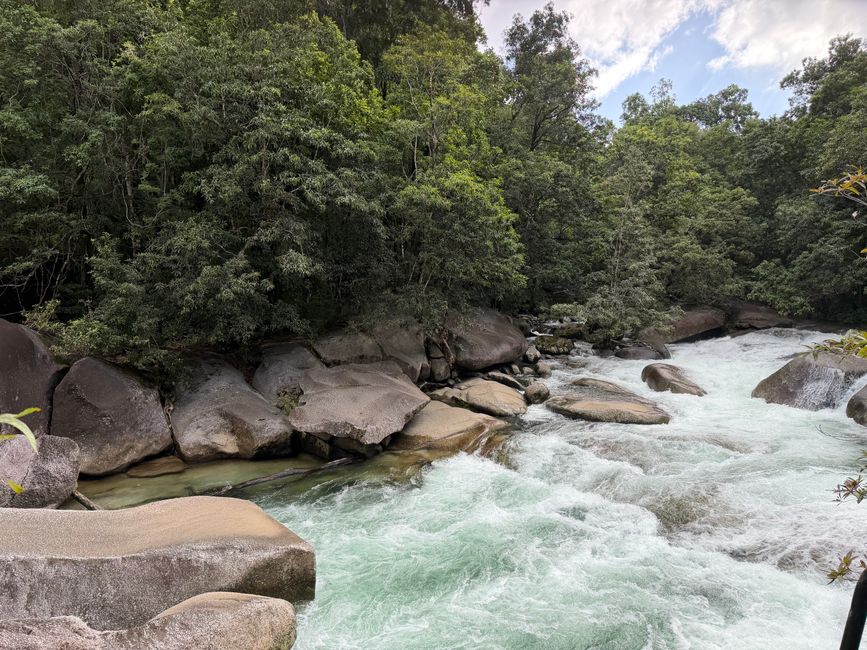
The Millaa Millaa Falls and the waterfall circuit that connects it to the Ellinjaa Falls and the Zillie Falls in the south tablelands provide the waterfall experience that the plateau escarpment's many water descents create as the rivers fed by the high plateau rainfall reach the plateau edge. The Millaa Millaa Falls' perfectly symmetrical cascade into the pool below, surrounded by the rainforest that the continuous spray sustains in the lushness that the waterfall microclimate creates, provides the waterfall image that appears more than any other single photograph in the Far North Queensland tourism marketing.
The agricultural tourism of the Atherton Tablelands, including the Nerada Tea Estate that has been growing and processing Australian tea since 1958 and the coffee plantations that have established on the tablelands as the tropical altitude conditions suit the coffee plant, provides the food and farm gate tourism that complements the ecological attractions. The tablelands' food culture, including the Highland Harvest Festival and the farmers' markets that connect the upland producers to the Cairns consumer market, sustains the agricultural identity that the landscape's productivity has maintained through the changes in the agricultural economy that the export commodity prices and the domestic market requirements have generated.
This article was compiled by AI from the sources linked above and screened before publishing. See our editorial standards.