Our reporters are based in Cairns and cover local government, business and community. The Daily Cairns is independently owned and editorially independent — no political party, council or commercial sponsor decides what we publish. Read our editorial standards →
The Atherton Tablelands, rising from the coastal lowlands behind Cairns to an elevated plateau of volcanic soils and cooler climate, provide one of Australia's most productive and scenically varied agricultural regions alongside the natural attractions that draw visitors from Cairns seeking a cooler, less tropical environment. The combination of the Curtain Fig Tree, the crater lakes, the waterfalls of the Atherton and Millaa Millaa areas, and the dairy farms and tropical fruit orchards that the volcanic soils support creates a day-trip or overnight destination of surprising variety.
Lake Eacham and Lake Barrine, the two main crater lakes of the Tablelands, formed in volcanic craters and now filled with clear fresh water surrounded by intact rainforest, provide swimming and picnicking experiences in a forest setting that the tropical coastal environment cannot offer. The lakes' rainforest bird life, including the spectacular double-eyed fig parrot and the various pigeons and fruit-doves that inhabit the crater rims, attract birdwatchers whose visits to the Tablelands are specifically motivated by the bird species assemblage rather than the scenery alone.
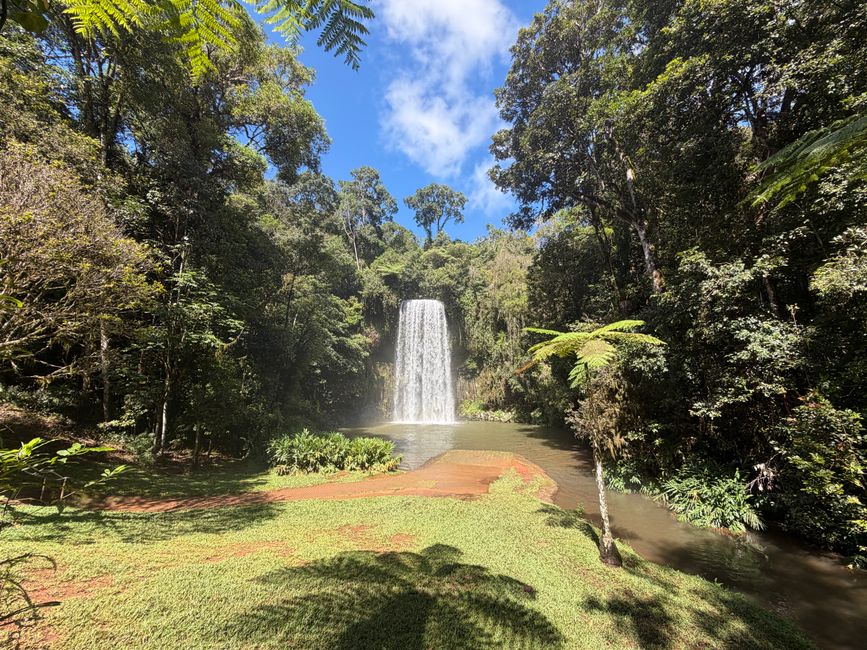
The Millaa Millaa Falls, Zillie Falls, and Ellinjaa Falls in the Millaa Millaa Falls circuit provide a waterfall experience that the Tablelands' higher rainfall and the ancient volcanic terrain produce in accessible concentration. The Millaa Millaa Falls' circular pool at the base, its rainbow in the mist, and the depth of surrounding vegetation have made it the most photographed waterfall in Queensland and one of Australia's most recognisable natural images.
The Tablelands' agricultural produce, including the dairy products of Mungalli Creek Dairy, the coffee of the Skybury plantation, and the tropical fruits including durian, rambutan, and jackfruit that the climate supports, provide the farm gate and specialty food shopping that food tourists pursue. The combination of European dairy farming traditions and tropical fruit production in the same landscape reflects the agricultural diversity that the Tablelands' climate range from subtropical rainforest to cooler grassy upland makes possible.
This article was compiled by AI from the sources linked above and screened before publishing. See our editorial standards.