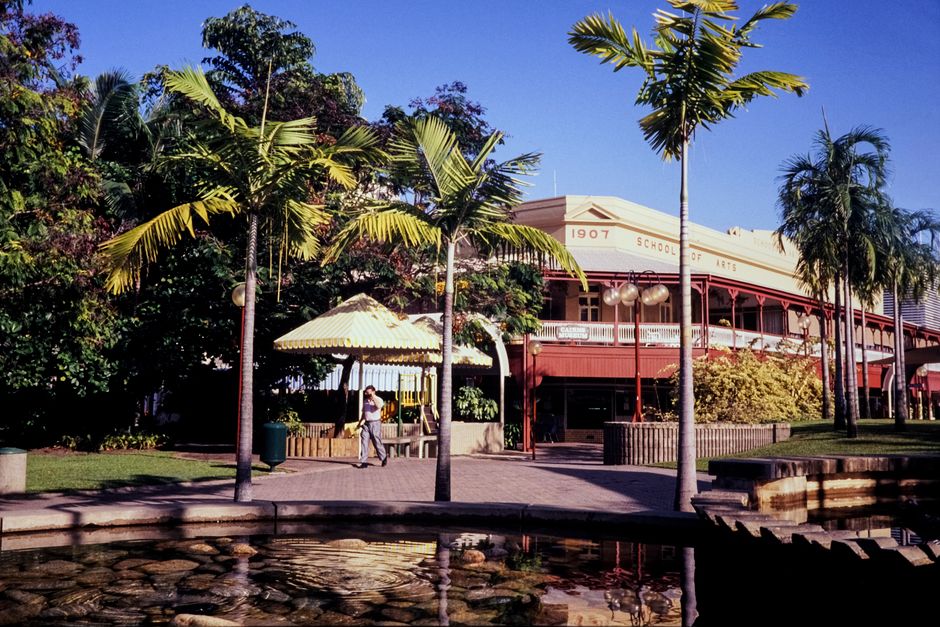
On any given Tuesday evening, the Cairns Community Shed on Abbott Street buzzes with activity—locals fixing bicycles, sharing tools, and swapping stories. It's a modest operation, but it reflects something increasingly rare in major cities: genuine neighbourhood-scale problem solving.
"We've had 340 active members this year alone," says the volunteer-run collective's coordinator. "That's not unusual for Cairns anymore, but it's exceptional globally." Similar initiatives in comparable cities—Melbourne's community spaces report half that engagement; Toronto's tool libraries struggle with consistent participation—suggest Cairns has cracked something others haven't.
The difference lies partly in scale and partly in strategy. With a population hovering around 150,000, Cairns lacks the anonymity of larger cities, yet possesses enough critical mass to sustain specialised services. The Cairns Neighbourhood Watch Council reports 87 active street groups, up 34 per cent since 2023. By contrast, Sydney's sprawling suburbs manage similar engagement rates despite having 15 times the population.
Local data tells a compelling story. The Cairns City Council's 2026 community wellbeing survey found 68 per cent of respondents feel "strongly connected" to their neighbourhood—a figure that outstrips Brisbane (52 per cent) and matches only the most cohesive pockets of cities like Vancouver and Copenhagen.
Part of this success traces to geography and intentional design. The Esplanade precinct, reimagined over the past three years with expanded public seating and weekend activation programming, has become a genuine community hub rather than merely a tourist attraction. Local venues like the Tanks Arts Centre have embedded themselves in neighbourhood networks, hosting 200-plus community events annually.
But perhaps the most significant factor is cultural. Cairns has embraced what urban sociologists call "friction-positive design"—creating circumstances where strangers naturally encounter one another. The recently expanded Cairns Central precinct's mixed-use zoning means residents shop, work, and socialise in the same geographic radius, naturally reinforcing social bonds.
"We're not doing anything revolutionary," acknowledges a local community development officer. "But we're doing it consistently, with real investment. That compounds."
As global cities grapple with loneliness epidemics and fractured civic life, Cairns offers a quiet case study: that intentional neighbourhood building, sustained across years, can reshape how a city actually functions. It won't solve everything. But on Abbott Street and across Cairns' leafy streets, it's already reshaping how neighbours know one another.
This article was compiled by AI from the sources linked above and screened before publishing. See our editorial standards.