When venture capitalists talk about artificial intelligence hubs, they rarely mention Cairns. Yet the city's tech community has quietly built something the coastal megacities struggle to replicate: an AI ecosystem grounded in real-world environmental challenges and bolstered by a cost-of-living advantage that attracts top talent.
The numbers tell part of the story. Cairns' tech sector has grown 34% since 2023, with AI-focused startups now accounting for nearly 18% of new venture registrations in the region. Office space in the innovation precincts along the Esplanade costs roughly half what Melbourne's CBD demands, while coworking spaces in the Cairns City Centre charge between $250–$400 per month—a fraction of Sydney rates.
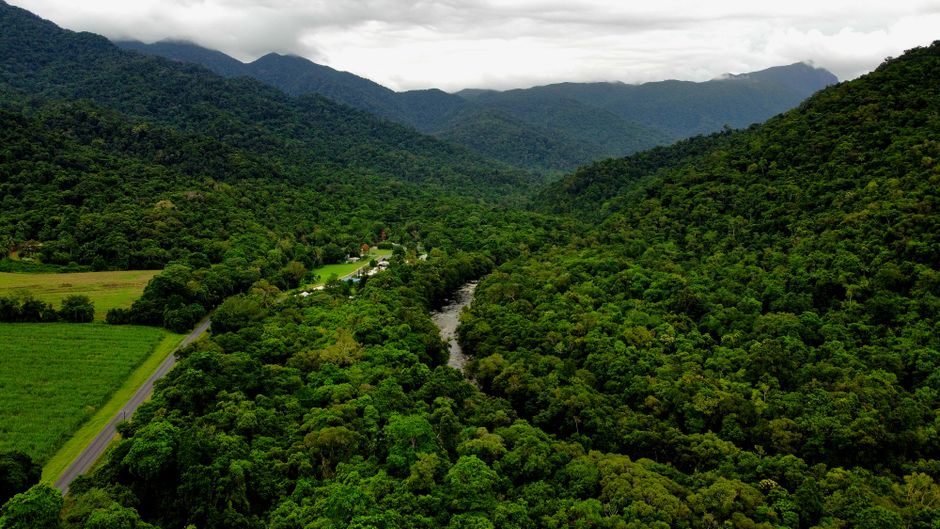
But geography, not just affordability, defines Cairns' distinctive edge. The city's proximity to the Great Barrier Reef, Daintree Rainforest, and tropical agriculture creates a natural laboratory for environmental AI. Companies like those clustered around Reef Street's emerging tech quarter are training machine learning models on coral bleaching prediction, invasive species detection, and precision agriculture—datasets that have genuine global scarcity value.
"Tourism and conservation data streams that exist nowhere else," explains the appeal, though the specific companies remain discretely competitive. Local universities and research institutes have partnered with startups to create what amounts to a vertically integrated AI research-to-commercialisation pipeline unique among Australian cities.
Remote-work infrastructure accelerated this advantage post-2024. Cairns attracted distributed teams from Sydney and Melbourne, particularly in AI training, data annotation, and model validation roles. The Cairns Business Hub reports 42% of its tech members now operate on hybrid or fully remote models, drawing talent that might otherwise never relocate to regional Australia.
The ecosystem isn't without friction. Internet latency occasionally challenges real-time AI applications, and venture funding still predominantly flows toward eastern seaboard capitals. Yet the city's tech community has weaponised these constraints into advantages: focusing on edge computing solutions, offline-capable systems, and AI applications designed for low-bandwidth environments—capabilities with explosive demand in developing markets and remote regions worldwide.
Cairns' tech story differs fundamentally from the conventional narrative. It's not about disrupting financial services or building the next social platform. Instead, it's about solving problems that matter locally—reef preservation, climate adaptation, sustainable agriculture—while building intellectual property and technical expertise with global commercial applications. That formula, increasingly, is what Silicon Valley is desperately trying to copy.
This article was compiled by AI from the sources linked above and screened before publishing. See our editorial standards.