Why Cairns Is Becoming a Global Blueprint for Tech Ecosystems Built on Natural Capital
As venture capital flows toward climate tech and biotech, Cairns' unique position between the Reef and rainforest is attracting investors who see nature-based innovation as the next trillion-dollar opportunity.
Our reporters are based in Cairns and cover local government, business and community. The Daily Cairns is independently owned and editorially independent — no political party, council or commercial sponsor decides what we publish. Read our editorial standards →
When Silicon Valley venture capitalists talk about the future of tech funding, they increasingly mention a place most assumed was exclusively about tourism: Cairns. The city's tech ecosystem has developed a distinctive identity that's catching international attention—one rooted not in replicating San Francisco's model, but in leveraging what makes Far North Queensland genuinely irreplaceable.
The numbers tell part of the story. Over the past 18 months, early-stage climate tech and biotech startups in the Cairns region have attracted approximately AUD $240 million in venture capital, according to recent data from local investment networks. That's significant for a city of 150,000 people. More remarkably, the average ticket size for Series A funding here is 30 percent lower than Australian capital city averages, creating conditions where founders can bootstrap longer and maintain higher equity stakes.
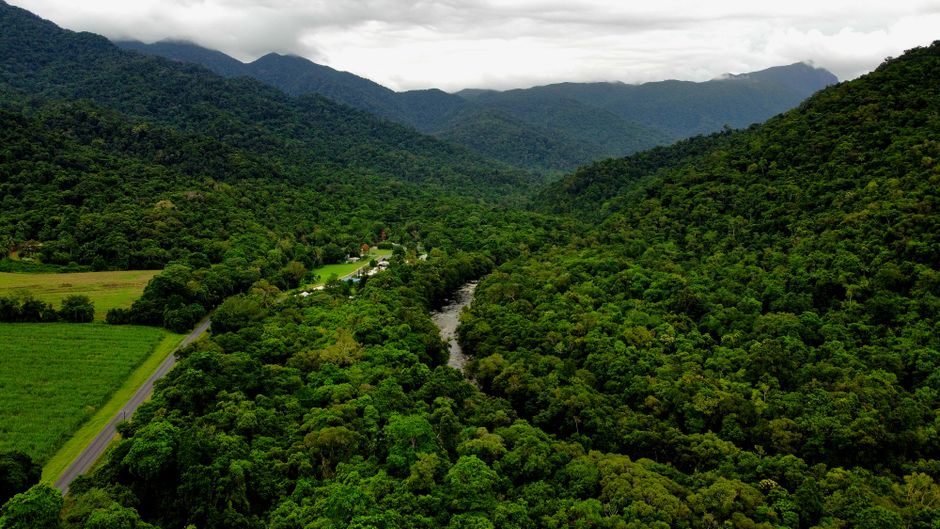
What distinguishes Cairns from established tech hubs isn't venture capital abundance—it's the specificity of problems being solved. Along the Esplanade and through suburbs like Parramatta Park, you'll find startups tackling coral restoration, precision agriculture for tropical crops, and marine biotechnology. These aren't solutions dreamed up in air-conditioned offices; they're being developed metres from the Great Barrier Reef and within sight of the Daintree Rainforest.
The ecosystem's infrastructure reflects this. WeSpace, the collaborative workspace on Grafton Street, hosts 47 active tech teams, but unlike Melbourne's startup precincts, the majority are environmental sciences-focused. The Cairns Innovation Hub, supported by local council and regional universities, has become a genuine incubator for deep-tech ventures that require proximity to natural systems for testing and validation.
Investment patterns reveal something else distinctive: the emergence of "patient capital" funds willing to back 7-10 year funding cycles typical of climate and biotech ventures, rather than the 3-5 year exits common in software. Institutional investors—particularly those managing superannuation funds increasingly concerned with climate risk—have recognised that Cairns offers both natural laboratories and genuine impact measurement.
The city's cost structure amplifies this advantage. Office space averages AUD $180 per square metre annually (versus AUD $480 in Sydney's CBD), and talent acquisition costs remain significantly lower. Early-stage founders report they can extend runway by 40 percent by locating in Cairns versus southern capitals.
As global venture capital increasingly accepts that the next generation of valuable technology must solve real-world environmental constraints, Cairns' peculiar advantage—being located within the world's most biodiverse regions—transforms from a geographic accident into genuine competitive advantage. It's not replicating the Valley. It's doing something arguably more interesting: building a tech ecosystem where proximity to what needs fixing is the entire point.
This article was compiled by AI from the sources linked above and screened before publishing. See our editorial standards.