Stress is not a mood. It is a measurable physiological state, and Australians are spending more time in it. The Australian Institute of Health and Welfare reported in its 2025 national health survey that nearly one in three adults — 32 percent — rated their psychological distress levels as high or very high in the preceding four weeks. For Cairns residents, that number lands against a backdrop of housing affordability pressure, a cost-of-living squeeze that has not yet fully eased, and a tropical wet season that, for all its beauty, can compress social life and hike humidity-related fatigue through January and February. The good news: five interventions with solid peer-reviewed backing can be woven into a Cairns week without a gym membership or a specialist referral.
What the science actually supports
Start with controlled breathing. The physiological sigh — two sharp inhales through the nose followed by one long exhale — was validated in a 2023 Stanford University study published in Cell Reports Medicine as the fastest real-time method to lower heart rate and cortisol. Twenty-five repetitions, roughly five minutes, produced measurable reductions in self-reported anxiety. Cairns readers can pair this with the view from the boardwalk at the Cairns Esplanade between Minnie Street and Upward Street — a deliberately low-stimulation environment designed, when it was redeveloped in 2003, with pedestrian wellbeing in mind.
Second: cold-water immersion. Brief exposure to cool water — not ice baths, just a cold shower or a swim in a freshwater pool — triggers a noradrenaline surge that research associates with improved mood regulation. The natural swimming holes of the Atherton Tablelands, including Millaa Millaa Falls and the Babinda Boulders 60 kilometres south of Cairns on the Bruce Highway, offer a practical version of this. Both sites are free to access and the water temperature at Babinda hovers around 22 degrees year-round.
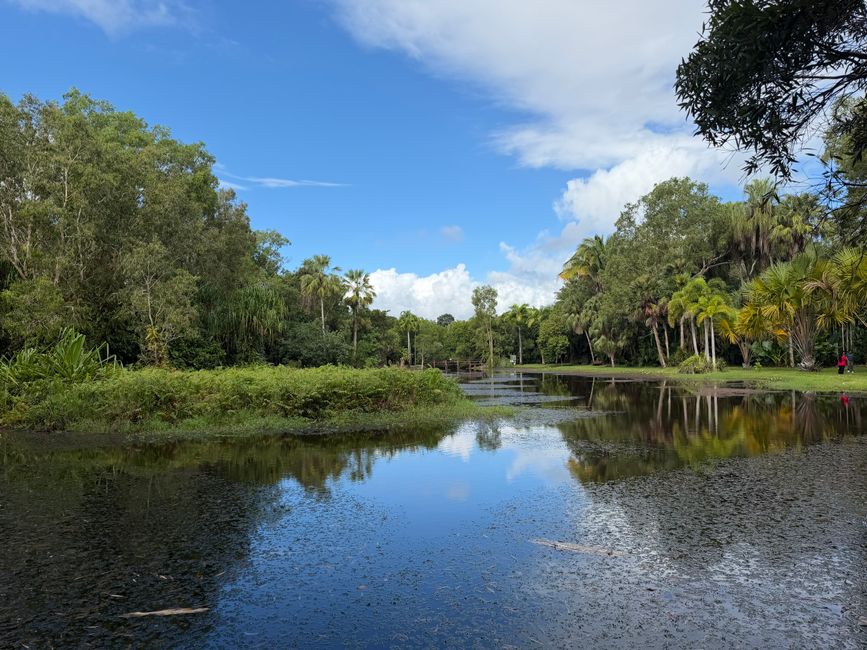
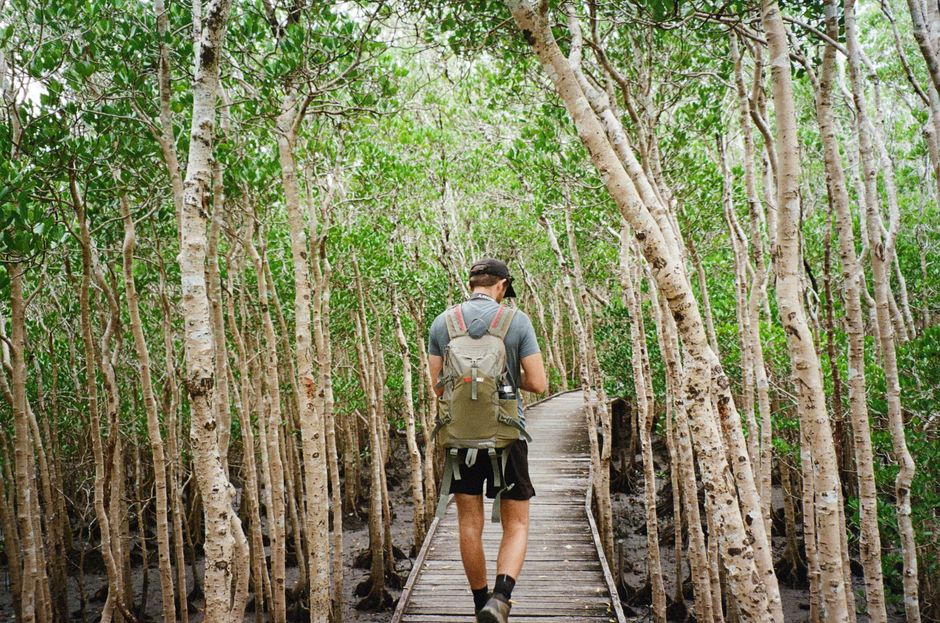
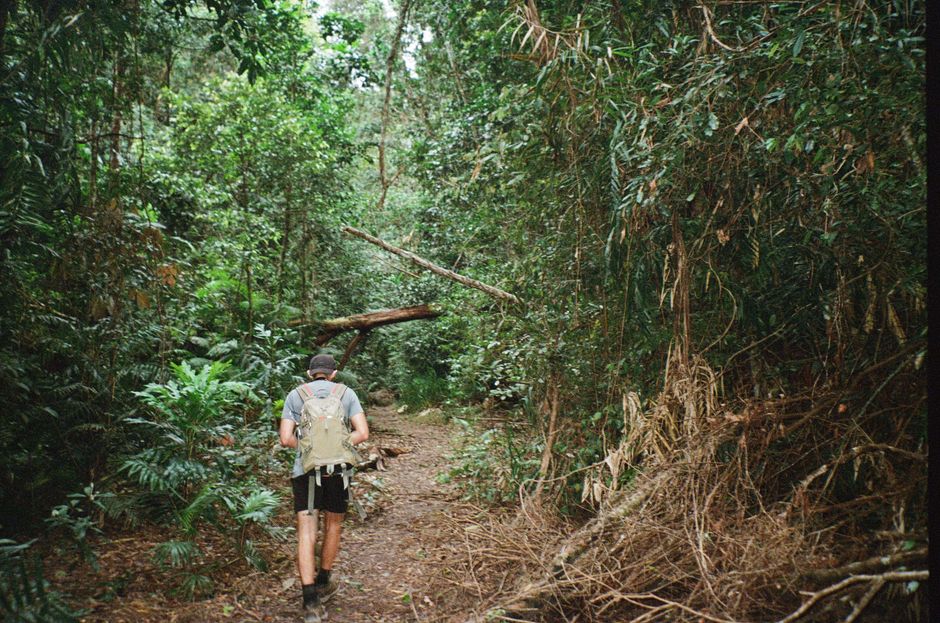
Third: time in nature, specifically what Japanese researchers call shinrin-yoku, or forest bathing. A 2019 meta-analysis in Environmental Health and Preventive Medicine confirmed that 120 minutes per week in natural settings produces statistically significant reductions in cortisol, blood pressure and self-reported stress. The Rainforestation Nature Park at Kuranda, 25 minutes northwest of the Cairns CBD on the Kennedy Highway, and the Daintree Rainforest, 110 kilometres north, both qualify. Membership of the Cairns Regional Council's walking trail network costs nothing; the Cairns Botanic Gardens on Collins Avenue in Edge Hill is free every day of the week.
Fourth: social connection — structured, not passive scrolling. A 2024 Lancet review of 148 studies found loneliness increases cortisol production by up to 23 percent over time. Community markets serve as low-pressure social anchors. Rusty's Markets on Sheridan Street, open Friday through Sunday, draws consistent foot traffic from across the city; the social ritual of choosing papaya or soursop from a known stall operator is not trivial — it is exactly the kind of low-stakes repeated human contact the Lancet researchers identified as protective.
Getting professional support when you need it
Fifth: mindfulness-based stress reduction, or MBSR, the eight-week program developed by Jon Kabat-Zinn at the University of Massachusetts in 1979 and now the most replicated psychological intervention in stress research. Locally, the Cairns and Hinterland Hospital and Health Service runs mental health programs through Cairns Base Hospital on The Esplanade, and EACH, a community mental health organisation with a Cairns office, offers MBSR-adjacent group programs. A GP referral under a Mental Health Care Plan can make sessions rebatable through Medicare — currently up to 20 individual sessions per calendar year.
Anyone experiencing persistent distress, not just a bad week but weeks of it, should book an appointment with a GP at one of Cairns' bulk-billing clinics before self-prescribing any wellness routine. The Cairns Doctors on Sheridan Street and the Tropical Medical Practice on Lake Street both bulk-bill and can facilitate referrals under the Better Access initiative. The five techniques above work best as complements to professional care, not substitutes for it. Start with the breathing. Then walk to the Botanic Gardens. The evidence, at least, is firmly on your side.